

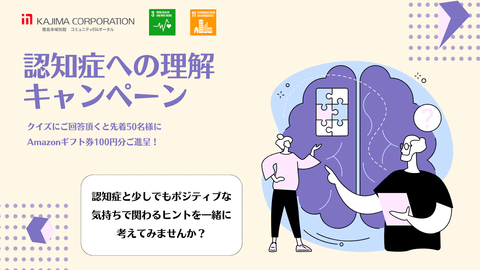
Dementia Awareness Campaign: Learn More About Dementia
Dementia: Not Someone Else's Problem
According to a Cabinet Office announcement, one in five people aged 65 and over (20%) are expected to have dementia by 2025, meaning anyone can develop dementia or become a supporter of someone with dementia. Given that dementia is not someone else's problem, do you ever worry about what would happen if a family member, someone close to you, or even yourself, developed it? Or perhaps you are already involved with someone with dementia? This time, we will explore tips on how to approach dementia with a more positive attitude.
If a family member or someone close to you develops dementia
As mentioned above, developing dementia is a very natural occurrence, and anyone may experience interacting with family members or close ones who have dementia. However, it can be challenging to provide support due to symptoms like memory loss or the inability to do things they once could, often leading to significant emotional burden. It is crucial to effectively reduce the burden of support to take care of yourself.
To reduce the burden of support
- Make time for yourself outside of caregiving, for hobbies you enjoy
- Expand your network to gain information
- Recognize what the person with dementia can still do and cherish it
- Feel free to consult various organizations, people, and groups at any time
- Actively utilize services such as long-term care insurance
Furthermore, when interacting with someone with dementia, it is important to treat them with respect as "that person" to provide reassurance, and to patiently observe what they can do, even if it takes time.
Cooperation as a member of the community
Many people with dementia wander beyond their homes and into the community. Wandering can lead to accidents or getting lost, so even if you don't have a close connection to someone with dementia, deepening your knowledge of dementia and offering support as a member of the community is a crucial action to protect lives.
Signs to recognize wandering
- Walking in the rain without an umbrella
- Walking barefoot, in slippers, or with mismatched shoes
- Wearing clothes inappropriate for the weather
- Walking during hours that are not typical for a stroll, such as late at night or early morning
- Appearing lost, such as tilting their head at an intersection
- Walking back and forth in the same area, etc.
If you find someone who is wandering
- Approach them gently from the front, without startling or alarming them, listen carefully to the purpose of their actions and their thoughts, and empathize with their feelings.
- If they cannot state their name or address, check their clothes or shoes for contact information, and contact their family or the police, ensuring their safety.
Towards understanding dementia
Finally, to foster understanding of dementia, we will briefly explain its symptoms and characteristics. Dementia symptoms are categorized into "core symptoms" and "behavioral and psychological symptoms." Core symptoms are those that arise directly from the death of brain nerve cells, including memory impairment, disorientation, and impaired understanding and judgment. On the other hand, behavioral and psychological symptoms refer to anxiety, agitation, hallucinations, depression, and wandering, which result from a complex interplay of the person's inherent personality, environment, and interpersonal relationships.
Dementia prevention
Dementia is a disease that anyone can develop, but Alzheimer's disease and vascular dementia are strongly linked to lifestyle diseases. Maintaining a diet rich in vegetables, fruits, and seafood, engaging in regular physical activity and stress-reducing activities, and leading a life that stimulates the mind can potentially contribute to dementia prevention.
Dementia often brings confusion regarding its symptoms and how to deal with them, but by not bearing the burden alone, expanding your network, and actively seeking help from specialized institutions and services, both the person with dementia and their supporters can sometimes experience more positive feelings. Furthermore, support as a member of the community is also extremely important. Let's understand dementia and create a community where everyone can thrive.
Reference materials for learning more about dementia
Web Resources
- Please read this if you are concerned
- Guide to a Better Life for the Person with Dementia
- Handbook on Young-Onset Dementia
- MCI Handbook: Keeping Your Mind and Body Healthy
- Dementia Care Pathway
Books
-
"Manga de Wakaru! Ninchi-sho no Hito ga Miteiru Sekai (Health & Practical Use)" (Understand with Manga! The World Seen by People with Dementia), Endo Hidetoshi (Supervisor), Kawabata Satoshi (Author), 2021, Bunkyosha.
-
"Ninchi-sho no Hito o Rikai Shitai to Omotta Toki ni Yomu Hon - Tadashii Chishiki to Yasashii Yorisoikata" (A Book to Read When You Want to Understand People with Dementia - Correct Knowledge and Gentle Support), Uchimon Daijo (Supervisor), 2018, Daiwa Shuppan.
-
"Kimochi ga Raku ni Naru Ninchi-sho Kazoku to no Kurashikata" (How to Live with a Family Member with Dementia and Feel More at Ease), Shigeta Masahiro (Supervisor), Uchimon Daijo, Osawa Makoto (Supervisory Cooperation), 2018, Ikeda Shoten.
-
"Marugoto Zukai Ninchi-sho" (Complete Illustrated Guide to Dementia), Yamaguchi Hiroshi (Author), 2020, Shorinsha.
Dementia Consultation Services
Quiz
First 50 people to get all answers correct receive a special gift! "Dementia Quiz"
-
The first 50 people who correctly answer all questions in the dementia quiz will receive a 100-yen Amazon gift certificate or can choose to make a donation.
*Prizes are limited and will be awarded until the capacity is reached.
*You can attempt the quiz multiple times! (Prizes are limited to one per person)
Prize Delivery
- Only those who answer all five questions correctly are eligible.
- Prizes are limited to one per person.
- Redemption instructions will be sent to the email address registered in your membership information.
- Please note that delivery may be delayed due to our circumstances.
Eligibility Criteria
The following conditions must all be met to be eligible:
- Currently working at "Kashima Akasaka Annex."
- Registered as a tenant member on the Kashima Akasaka Annex ESG portal site and completed this quiz.
Important Notes
- This quiz can only be accessed from a computer or smartphone. It cannot be answered from mobile phones other than smartphones.
- This page is current as of October 1, 2023. The content described may be suspended, canceled, or changed without prior notice.
- This quiz is conducted by GOYOH Inc. For inquiries, please click here.
- Amazon.co.jp is not a sponsor of this event.
- Inquiries regarding this event are not accepted by Amazon. Amazon, Amazon.co.jp and the Amazon.co.jp logo are trademarks of Amazon.com, Inc. or its affiliates.
Was this article helpful?
Dementia Awareness Campaign: Learn More About Dementia
Dementia: Not Someone Else's Problem
According to a Cabinet Office announcement, one in five people aged 65 and over (20%) are expected to have dementia by 2025, meaning anyone can develop dementia or become a supporter of someone with dementia. Given that dementia is not someone else's problem, do you ever worry about what would happen if a family member, someone close to you, or even yourself, developed it? Or perhaps you are already involved with someone with dementia? This time, we will explore tips on how to approach dementia with a more positive attitude.
If a family member or someone close to you develops dementia
As mentioned above, developing dementia is a very natural occurrence, and anyone may experience interacting with family members or close ones who have dementia. However, it can be challenging to provide support due to symptoms like memory loss or the inability to do things they once could, often leading to significant emotional burden. It is crucial to effectively reduce the burden of support to take care of yourself.
To reduce the burden of support
- Make time for yourself outside of caregiving, for hobbies you enjoy
- Expand your network to gain information
- Recognize what the person with dementia can still do and cherish it
- Feel free to consult various organizations, people, and groups at any time
- Actively utilize services such as long-term care insurance
Furthermore, when interacting with someone with dementia, it is important to treat them with respect as "that person" to provide reassurance, and to patiently observe what they can do, even if it takes time.
Cooperation as a member of the community
Many people with dementia wander beyond their homes and into the community. Wandering can lead to accidents or getting lost, so even if you don't have a close connection to someone with dementia, deepening your knowledge of dementia and offering support as a member of the community is a crucial action to protect lives.
Signs to recognize wandering
- Walking in the rain without an umbrella
- Walking barefoot, in slippers, or with mismatched shoes
- Wearing clothes inappropriate for the weather
- Walking during hours that are not typical for a stroll, such as late at night or early morning
- Appearing lost, such as tilting their head at an intersection
- Walking back and forth in the same area, etc.
If you find someone who is wandering
- Approach them gently from the front, without startling or alarming them, listen carefully to the purpose of their actions and their thoughts, and empathize with their feelings.
- If they cannot state their name or address, check their clothes or shoes for contact information, and contact their family or the police, ensuring their safety.
Towards understanding dementia
Finally, to foster understanding of dementia, we will briefly explain its symptoms and characteristics. Dementia symptoms are categorized into "core symptoms" and "behavioral and psychological symptoms." Core symptoms are those that arise directly from the death of brain nerve cells, including memory impairment, disorientation, and impaired understanding and judgment. On the other hand, behavioral and psychological symptoms refer to anxiety, agitation, hallucinations, depression, and wandering, which result from a complex interplay of the person's inherent personality, environment, and interpersonal relationships.
Dementia prevention
Dementia is a disease that anyone can develop, but Alzheimer's disease and vascular dementia are strongly linked to lifestyle diseases. Maintaining a diet rich in vegetables, fruits, and seafood, engaging in regular physical activity and stress-reducing activities, and leading a life that stimulates the mind can potentially contribute to dementia prevention.
Dementia often brings confusion regarding its symptoms and how to deal with them, but by not bearing the burden alone, expanding your network, and actively seeking help from specialized institutions and services, both the person with dementia and their supporters can sometimes experience more positive feelings. Furthermore, support as a member of the community is also extremely important. Let's understand dementia and create a community where everyone can thrive.
Reference materials for learning more about dementia
Web Resources
- Please read this if you are concerned
- Guide to a Better Life for the Person with Dementia
- Handbook on Young-Onset Dementia
- MCI Handbook: Keeping Your Mind and Body Healthy
- Dementia Care Pathway
Books
-
"Manga de Wakaru! Ninchi-sho no Hito ga Miteiru Sekai (Health & Practical Use)" (Understand with Manga! The World Seen by People with Dementia), Endo Hidetoshi (Supervisor), Kawabata Satoshi (Author), 2021, Bunkyosha.
-
"Ninchi-sho no Hito o Rikai Shitai to Omotta Toki ni Yomu Hon - Tadashii Chishiki to Yasashii Yorisoikata" (A Book to Read When You Want to Understand People with Dementia - Correct Knowledge and Gentle Support), Uchimon Daijo (Supervisor), 2018, Daiwa Shuppan.
-
"Kimochi ga Raku ni Naru Ninchi-sho Kazoku to no Kurashikata" (How to Live with a Family Member with Dementia and Feel More at Ease), Shigeta Masahiro (Supervisor), Uchimon Daijo, Osawa Makoto (Supervisory Cooperation), 2018, Ikeda Shoten.
-
"Marugoto Zukai Ninchi-sho" (Complete Illustrated Guide to Dementia), Yamaguchi Hiroshi (Author), 2020, Shorinsha.
Dementia Consultation Services
Quiz
First 50 people to get all answers correct receive a special gift! "Dementia Quiz"
-
The first 50 people who correctly answer all questions in the dementia quiz will receive a 100-yen Amazon gift certificate or can choose to make a donation.
*Prizes are limited and will be awarded until the capacity is reached.
*You can attempt the quiz multiple times! (Prizes are limited to one per person)
Prize Delivery
- Only those who answer all five questions correctly are eligible.
- Prizes are limited to one per person.
- Redemption instructions will be sent to the email address registered in your membership information.
- Please note that delivery may be delayed due to our circumstances.
Eligibility Criteria
The following conditions must all be met to be eligible:
- Currently working at "Kashima Akasaka Annex."
- Registered as a tenant member on the Kashima Akasaka Annex ESG portal site and completed this quiz.
Important Notes
- This quiz can only be accessed from a computer or smartphone. It cannot be answered from mobile phones other than smartphones.
- This page is current as of October 1, 2023. The content described may be suspended, canceled, or changed without prior notice.
- This quiz is conducted by GOYOH Inc. For inquiries, please click here.
- Amazon.co.jp is not a sponsor of this event.
- Inquiries regarding this event are not accepted by Amazon. Amazon, Amazon.co.jp and the Amazon.co.jp logo are trademarks of Amazon.com, Inc. or its affiliates.