

Energy Efficiency in Shopping Centers
A shopping center is generally defined as a building, or a complex of buildings, designed and constructed to house retail stores and service establishments, usually with large parking facilities, providing many interrelated activities for a specific community or neighborhood. While shopping centers serve as hubs for market activities for economic and customer comfort, they also significantly impact sustainability and climate change. Large shopping malls, due to the inherent characteristics of their buildings, can significantly influence energy consumption. Improving building energy consumption has been proven to enhance their value and worth. This article aims to identify and highlight typical characteristics of shopping center energy consumption, major obstacles to improving energy performance, and the impact of these improvements on the value and worth of shopping centers.
Characteristics of Energy Consumption in Shopping Centers and Their Impact on Climate Change
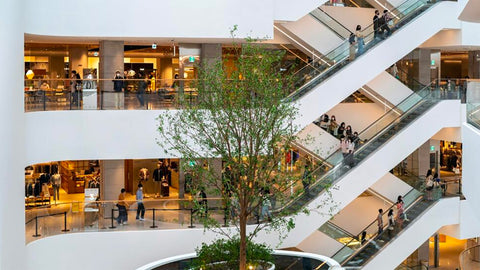
Internationally, energy use and system solutions differ depending on regional outdoor climate, available energy resources, prices, national building regulations, and traditions. For shopping centers, tenants are typically international chains and generally have the same requirements as tenants in other regions regarding system solutions and indoor climate, regardless of climatic differences. Shopping centers tend to have high lighting loads and high occupancy densities, leading to significant demands for air conditioning. There is also a trend towards increasing glass surfaces, and such design features affect the building's energy balance.
Today, shopping centers fulfill many needs beyond their commercial function. Shopping centers are equipped with recreational facilities and modern amenities, making them common destinations for dining rather than just daily shopping. Therefore, the tenant mix and overall ambiance, in addition to location, refreshment, and overall convenience, have become the most relatively important factors.
Heated shopping centers, featuring sofas, cafes, entertainment, and ample parking, are gaining popularity as visitors spend more time there. However, heating, air purification, and sufficient lighting for customers come with significant costs. The average energy consumption for such centers in Europe is approximately 300 kWh per square meter, leading to high levels of CO2 emissions and waste.
While most shopping centers in Europe are already built, regular renovations and design changes still offer significant potential for energy savings, with approximately 4% of shopping centers undergoing renovation annually. These continuously evolving shopping centers regularly provide opportunities to improve technical systems such as lighting, ventilation, building envelopes, and monitoring systems.
Impact of Building Energy Efficiency on Building Value and Worth
Sustainability is rapidly becoming synonymous with good business. Brand and reputation management are key drivers of sustainability. Financial performance is not the sole driver of business. Companies are beginning to recognize that business sustainability (and ultimately financial performance) is determined by a combination of factors, including economic growth, environmental balance, and social progress. Employees, communities, activist groups, governments, and, more recently, financial institutions are pressuring companies to proactively demonstrate their ability to manage environmental and social risks and to improve their performance in these areas.
Many industries, including retail and real estate development, have begun to address the challenges of sustainability and climate change. To address these issues and recognize new market demands, landlords are taking a leading role in collaborating with tenants to incorporate sustainable development principles into shopping centers.
A new study conducted by CBRE found that investments in sustainable features increased the market value of UK shopping centers by over 5%. In particular, older shopping centers, over 25 years old, could see gains exceeding 5%. For an average £100 million shopping center, such energy-saving renovations could boost its value to £105 million. In contrast, for more modern shopping centers (less than 5 years old), the achievable value increase is over 1%.
Strategies for Reducing Energy Consumption in Shopping Centers
Common strategies for reducing energy consumption in shopping malls include, but are not limited to, the following:
- Implementation of multifunctional, climate-adaptive facade systems with multi-purpose coatings and potential applications for strategic integration of vegetation to reduce heating and cooling demands.
- Applying smart natural ventilation and cooling to reduce the use of energy-intensive air conditioning systems.
- Reusing waste heat by applying heat pumps and heat recovery technologies.
- Introducing LED lighting with optimal lighting management systems and sensors to improve lighting efficiency.
- Enabling the use of natural light through windows, skylights, and solar tubes.
- Implementing renewable energy generation, incorporating solar thermal collectors, photovoltaic (PV) panels, and innovative battery systems to help meet the building's energy demands. A guide on effective sizing of photovoltaic systems by our subsidiary, Longevity Power, can be found here.
- Implementing intelligent building energy management systems to provide granular control over all systems, leading to reduced energy consumption and operational costs.
The Need for Landlord-Tenant Relationships
Approximately 25% of commercial property's carbon footprint comes from stores located in shopping centers, retail parks, and on high streets. These facilities are arguably the easiest to eliminate, as they tend to be large, modern, and owned primarily by institutional investors who can access the capital and expertise needed for "greening."
However, this is not always the case. The implementation of energy and carbon reduction technologies is complicated by the circumstances of leased properties because many tenants have personally set sustainability goals, have complete control over systems within their units, have individual schedules for implementing energy measures, and want to avoid business disruptions. Many large-scale energy efficiency measures require active cooperation between owners (landlords) and occupants (tenants), which presents a barrier.
Various new mechanisms have been established to overcome this obstacle, including memorandums of understanding (MoUs) between parties in existing lease agreements and "green leases," which directly insert clauses on cooperation between parties in new lease agreements, using environmentally friendly legal instruments. One thing is certain: the necessity of an effective landlord-tenant relationship is paramount for energy efficiency in shopping centers.
References
- RETAIL DELIVERY Tenants Sustainability Guide and Requirements by Hammerson DOCMAN_LDN_734198_1 (corporate-ir.net)
- Energy efficiency boosts value of shopping centres – Concept
https://conceptenergy.org/energy-efficiency-boosts-value-of-shopping-centres/ - Making shopping centres beacons of energy efficiency
https://ec.europa.eu/research-and-innovation/en/projects/success-stories/all/making-shopping-centres-beacons-energy-efficiency - Shopping centre retrofits could play major part in EU green goals – EiBi
https://eibi.co.uk/news/shopping-centre-retrofits-could-play-major-part-in-eu-green-goals/ - Energy savings in shopping centres – SINTEF
https://www.sintef.no/en/latest-news/2016/energy-savings-in-shopping-centres/ - Energy Efficiency in Shopping Centres – Maximpact
https://www.maximpact.com/energy-efficiency-shopping-centres/ - 1.4 billion sq ft of UK retail space could fail to meet energy efficiency standards – Savillis news
https://www.savills.co.uk/insight-and-opinion/savills-news/320947-0/1.4-billion-sq-ft-of-uk-retail-space-could-fail-to-meet-energy-efficiency-standards - Quantifying the impact of green leasing on energy use in a retail portfolio: limits to big data analytics 8-256-17_Wallom_FINAL SUBMISSION (ox.ac.uk)
- [1]DOCMAN_LDN_734198_1 (corporate-ir.net)
- [2] Quantifying the impact of green leasing on energy use in a retail portfolio: limits to big data analytics 8-256-17_Wallom_FINAL SUBMISSION (ox.ac.uk)
Was this article helpful?
Energy Efficiency in Shopping Centers
A shopping center is generally defined as a building, or a complex of buildings, designed and constructed to house retail stores and service establishments, usually with large parking facilities, providing many interrelated activities for a specific community or neighborhood. While shopping centers serve as hubs for market activities for economic and customer comfort, they also significantly impact sustainability and climate change. Large shopping malls, due to the inherent characteristics of their buildings, can significantly influence energy consumption. Improving building energy consumption has been proven to enhance their value and worth. This article aims to identify and highlight typical characteristics of shopping center energy consumption, major obstacles to improving energy performance, and the impact of these improvements on the value and worth of shopping centers.
Characteristics of Energy Consumption in Shopping Centers and Their Impact on Climate Change
Internationally, energy use and system solutions differ depending on regional outdoor climate, available energy resources, prices, national building regulations, and traditions. For shopping centers, tenants are typically international chains and generally have the same requirements as tenants in other regions regarding system solutions and indoor climate, regardless of climatic differences. Shopping centers tend to have high lighting loads and high occupancy densities, leading to significant demands for air conditioning. There is also a trend towards increasing glass surfaces, and such design features affect the building's energy balance.
Today, shopping centers fulfill many needs beyond their commercial function. Shopping centers are equipped with recreational facilities and modern amenities, making them common destinations for dining rather than just daily shopping. Therefore, the tenant mix and overall ambiance, in addition to location, refreshment, and overall convenience, have become the most relatively important factors.
Heated shopping centers, featuring sofas, cafes, entertainment, and ample parking, are gaining popularity as visitors spend more time there. However, heating, air purification, and sufficient lighting for customers come with significant costs. The average energy consumption for such centers in Europe is approximately 300 kWh per square meter, leading to high levels of CO2 emissions and waste.
While most shopping centers in Europe are already built, regular renovations and design changes still offer significant potential for energy savings, with approximately 4% of shopping centers undergoing renovation annually. These continuously evolving shopping centers regularly provide opportunities to improve technical systems such as lighting, ventilation, building envelopes, and monitoring systems.
Impact of Building Energy Efficiency on Building Value and Worth
Sustainability is rapidly becoming synonymous with good business. Brand and reputation management are key drivers of sustainability. Financial performance is not the sole driver of business. Companies are beginning to recognize that business sustainability (and ultimately financial performance) is determined by a combination of factors, including economic growth, environmental balance, and social progress. Employees, communities, activist groups, governments, and, more recently, financial institutions are pressuring companies to proactively demonstrate their ability to manage environmental and social risks and to improve their performance in these areas.
Many industries, including retail and real estate development, have begun to address the challenges of sustainability and climate change. To address these issues and recognize new market demands, landlords are taking a leading role in collaborating with tenants to incorporate sustainable development principles into shopping centers.
A new study conducted by CBRE found that investments in sustainable features increased the market value of UK shopping centers by over 5%. In particular, older shopping centers, over 25 years old, could see gains exceeding 5%. For an average £100 million shopping center, such energy-saving renovations could boost its value to £105 million. In contrast, for more modern shopping centers (less than 5 years old), the achievable value increase is over 1%.
Strategies for Reducing Energy Consumption in Shopping Centers
Common strategies for reducing energy consumption in shopping malls include, but are not limited to, the following:
- Implementation of multifunctional, climate-adaptive facade systems with multi-purpose coatings and potential applications for strategic integration of vegetation to reduce heating and cooling demands.
- Applying smart natural ventilation and cooling to reduce the use of energy-intensive air conditioning systems.
- Reusing waste heat by applying heat pumps and heat recovery technologies.
- Introducing LED lighting with optimal lighting management systems and sensors to improve lighting efficiency.
- Enabling the use of natural light through windows, skylights, and solar tubes.
- Implementing renewable energy generation, incorporating solar thermal collectors, photovoltaic (PV) panels, and innovative battery systems to help meet the building's energy demands. A guide on effective sizing of photovoltaic systems by our subsidiary, Longevity Power, can be found here.
- Implementing intelligent building energy management systems to provide granular control over all systems, leading to reduced energy consumption and operational costs.
The Need for Landlord-Tenant Relationships
Approximately 25% of commercial property's carbon footprint comes from stores located in shopping centers, retail parks, and on high streets. These facilities are arguably the easiest to eliminate, as they tend to be large, modern, and owned primarily by institutional investors who can access the capital and expertise needed for "greening."
However, this is not always the case. The implementation of energy and carbon reduction technologies is complicated by the circumstances of leased properties because many tenants have personally set sustainability goals, have complete control over systems within their units, have individual schedules for implementing energy measures, and want to avoid business disruptions. Many large-scale energy efficiency measures require active cooperation between owners (landlords) and occupants (tenants), which presents a barrier.
Various new mechanisms have been established to overcome this obstacle, including memorandums of understanding (MoUs) between parties in existing lease agreements and "green leases," which directly insert clauses on cooperation between parties in new lease agreements, using environmentally friendly legal instruments. One thing is certain: the necessity of an effective landlord-tenant relationship is paramount for energy efficiency in shopping centers.
References
- RETAIL DELIVERY Tenants Sustainability Guide and Requirements by Hammerson DOCMAN_LDN_734198_1 (corporate-ir.net)
- Energy efficiency boosts value of shopping centres – Concept
https://conceptenergy.org/energy-efficiency-boosts-value-of-shopping-centres/ - Making shopping centres beacons of energy efficiency
https://ec.europa.eu/research-and-innovation/en/projects/success-stories/all/making-shopping-centres-beacons-energy-efficiency - Shopping centre retrofits could play major part in EU green goals – EiBi
https://eibi.co.uk/news/shopping-centre-retrofits-could-play-major-part-in-eu-green-goals/ - Energy savings in shopping centres – SINTEF
https://www.sintef.no/en/latest-news/2016/energy-savings-in-shopping-centres/ - Energy Efficiency in Shopping Centres – Maximpact
https://www.maximpact.com/energy-efficiency-shopping-centres/ - 1.4 billion sq ft of UK retail space could fail to meet energy efficiency standards – Savillis news
https://www.savills.co.uk/insight-and-opinion/savills-news/320947-0/1.4-billion-sq-ft-of-uk-retail-space-could-fail-to-meet-energy-efficiency-standards - Quantifying the impact of green leasing on energy use in a retail portfolio: limits to big data analytics 8-256-17_Wallom_FINAL SUBMISSION (ox.ac.uk)
- [1]DOCMAN_LDN_734198_1 (corporate-ir.net)
- [2] Quantifying the impact of green leasing on energy use in a retail portfolio: limits to big data analytics 8-256-17_Wallom_FINAL SUBMISSION (ox.ac.uk)